Module 2
The Module 2 test is the final part to gaining your full licence, depending on your age will determine which category of Licence you can take and what size machine you can train or test on.
IN THIS SESSION WE COVER:
Your Instructor will cover everything with you on your road based training sessions so you will be ready to take your test.
For example, the theory, do’s and dont’s, correct riding procedures, angled and hill starts, overtaking, correct junction procedures and roundabouts.
Your instructor will discuss with you what would be classed as rider faults and examples of serious or dangerous faults. If you fail you will have to wait at least 10 working days before you can retake it.
PRE-TEST:
Just like the Module 1, your instructor will show you where to park up. You must remember all your documentation which will now include your Module 1 pass certificate. The test lasts roughly 40 minutes.
You will then meet your examiner who will:
- Check your documentation and do an eye sight check. (20m for old style number plates and 20.5 for new style)
- Ask you 3 questions (“show me/tell me”) 2 relating to the machine and 1 relating to carrying a passenger.
- They will give you a radio briefing before the road ride test element.
FOR THE TEST
- The examiner will follow closely behind and give clear directions of where they would like you to go. (You wont fail if you go the wrong way)
- You will perform both a hill start and an angled start
- At some point in the test you will be asked to “follow the signs for….” This is what is called the independent ride it will last roughly 10 minutes and tests your ability to ride safely whilst making your own decisions.

Awareness and planning
You will need to demonstrate safe riding with regards to emerging hazards and anticipating the actions of others.
This means planning ahead rather than just reacting. Added consideration needs to be given to vulnerable road users such as:
- Other motorcyclists
- Cyclists
- Horse riders
- Pedestrians
Clearance and obstructions
Watch out for emerging situations, such as pedestrians walking out from between parked cars, doors opening and vehicles trying to move off.
Control
Being able to show you are in control of the machine, this will be more apparent at junctions and mini roundabouts for example.
Control areas include:
- Throttle
- Clutch
- Gears
- Front brake
- Rear brake
- Steering
- Balance/slow control
- Ancillary controls
Following distance

Judgement
Filtering is a choice and not required as part of your test.
Junctions including Roundabouts
Any rider faults or serious faults would be based on the following:
- Your approach speed
- Correct timing of observations
- Positioning on approach and whilst on the roundabout
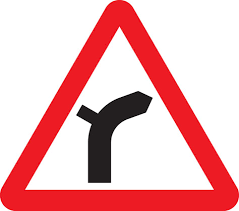
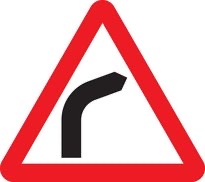
- Positioning also applies to bends
- Turning left or right and correct positioning.
- Making your intentions clear and not causing anyone to change speed or direction.
Move away
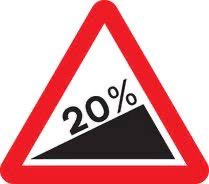
This will include pulling away at junctions, the side of the road and on your hill start.
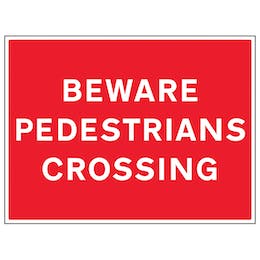
Pedestrian crossings
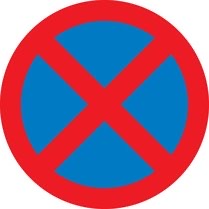
Position / normal stops
Positioning
Lane discipline – taking a safe position within your own lane when negotiating roundabouts, corners and correctly following road markings.

Precautions
Before you set off check:
- Your helmet is correctly fastened
- Your mirrors are correctly positioned
- The side stand is up
- The bike is in neutral
Progress
Undue hesitation – waiting unnecessarily, or slowing down when you didn’t have to.
Driving too slowly for the road you are on.

Rear observations
Change direction – a safe manoeuvre to include correct timing of observations
Use of observations when anticipating or needing to change speed.
Response to signals
Responding correctly to the following:
- Road signs
- Road markings
- Traffic lights
- Traffic controllers
- Other road users


Signals
Showing your intentions clearly to others and not misleading other road users.
Necessary – Was a signal required
Correctly – The correct signal was used
Timed – The timing of the signal was correct.
Use of speed
Getting up to speed in good time according to the speed limits when safe to do so.
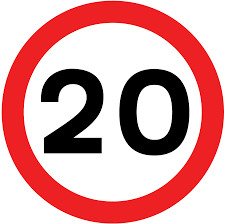
Breaking the speed limit will all result in a serious fault.